
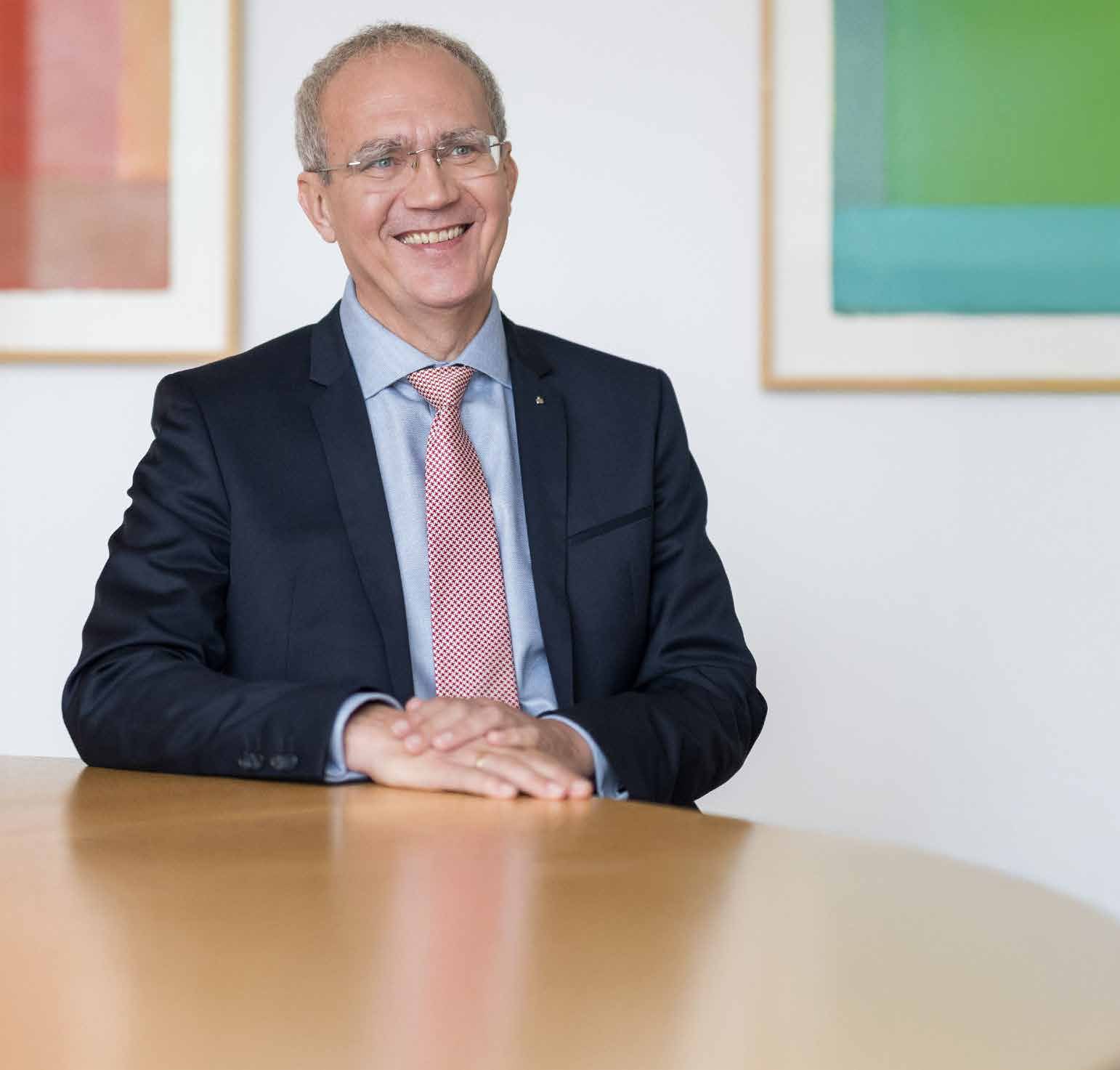
Digitalisation, artificial intelligence and a generation that is rethinking financial services: the Savings Banks Finance Group faces enormous challenges. In this interview, Dr Joachim Schmalzl, Executive Board Member of the DSGV, explains how Germany’s largest financial group is positioning itself between digital speed and personal proximity, how it is attracting young people as customers and employees, and why the multi-channel approach is becoming part of its long-term strategy.
Dr Schmalzl, what are the main challenges currently facing the Savings Banks Finance Group?
Schmalzl: The Savings Banks Finance Group is currently undergoing a profound transformation, characterised by digitalisation, artificial intelligence, changing customer expectations and intensified competition. Young customers in particular expect intuitive digital services, fast processes, a high degree of transparency and flexibility. We are also seeing that financial services are increasingly being used in parallel across different providers. This is raising expectations of our services. At the same time, customer access is undergoing fundamental changes due to digital platforms, AI-supported services and new competitors.
Is the Group in a good position to deal with this change?
Schmalzl: The Savings Banks have a strong market position with around 42 million customers; our reach is well over 50 percent. Security, reliability and regional responsibility remain our key strengths. Our experience and competitive terms are crucial for customer loyalty and form part of the foundation of our success. To ensure our continued success, we are investing in digital infrastructure, platform solutions and integrated services. This enables us to offer our customers security and autonomy, so that we can support them as effectively as possible. However, it should also be clear that the future of our work will not only be digital and sustainable, but also personal and social.
What are the specific challenges when dealing with young people such as Generation Z?
Schmalzl: Young people expect digital services that are intuitive, fast and flexible to use. They want to decide for themselves how they manage their financial affairs – whether digitally, in person or by switching between the two. There is also a great need for clear guidance on financial matters. They expect transparency, simple processes and control over their own finances. Gen Z often use financial services on a case-by-case basis, combining different providers depending on which solution best suits their needs at any given moment. Financial education is becoming increasingly important because it contributes to financial self-determination and economic participation. This is where we step in with specific initiatives, such as the School Service, the Stock Market Simulation Game or the ‘Money & Household’ advisory service. It is crucial to reach young people where they spend their time in everyday life, including in digital environments and on social media platforms.
»Young people want to decide for themselves how they manage their financial affairs – whether digitally, in person or by switching between the two.«
Managing Member of the Executive Board of the DSGV
With this in mind, how is the strategic direction of the Savings Banks Finance Group evolving?
Schmalzl: We are consistently building on our multi-channel approach: people should be able to decide for themselves how they conduct their financial transactions with us – in person, digitally or flexibly, switching between the two. The aim is to provide an excellent and seamless customer experience across all channels of contact. The success of this approach can be seen, for example, in the user figures for our app: 20 million users are a strong indication of the trust people place in the Savings Banks. For many, our app has long been the main way they access their finances.
In the digital world, the Savings Banks are making targeted investments in several areas to ensure their services are fit for the future. A key focus is on the further development of the ‘Sparkasse’ app, as well as on digital and innovative products and services. One example is S-Neo within the Sparkasse app, which provides a wide range of securities for independent investors and makes it easy to start investing in shares, funds and ETFs. Another key component is Wero, part of the European Payment Initiative (EPI), an alliance of 16 banks and financial service providers, which includes the Savings Banks Finance Group.
The Wero payment system enables fast mobile-to-mobile payments and offers a standardised, digital omnichannel payment solution across Europe, which is already used by more than 42 million people. What remains unchanged, however, is that personal advice remains a key factor when it comes to complex financial decisions – even for younger target groups.
So it’s primarily about customer satisfaction. Could you explain this approach in a bit more detail?
Schmalzl: Customer satisfaction today is about much more than just traditional banking. It also includes modern digital solutions such as secure identity and authentication procedures, as well as, looking ahead, the EUDI Wallet – the European Digital Identity Wallet. This combines proof of identity and payment in a secure European wallet. With Wero, we are introducing a European payment solution into the EUDI Wallet ecosystem. All our customers need for all of this is a smartphone. AI-powered services and digital assistants will also play a greater role in future, for example when searching for information, in service processes or with personalised offers. Customers expect digital solutions for their interconnected everyday lives – whether for banking, on social media, when travelling or when working in Europe. In the age of AI, the tension between personalised offers and data protection is growing. The combination of technological innovation, a personal approach and trust in the Savings Banks brand therefore remains crucial. In figures, this means: around 35.4 million online banking accounts and 196 million visits to our online branches demonstrate the high level of usage of our digital services. At the same time, around 129,000 advisers are on hand to provide personal, local service.
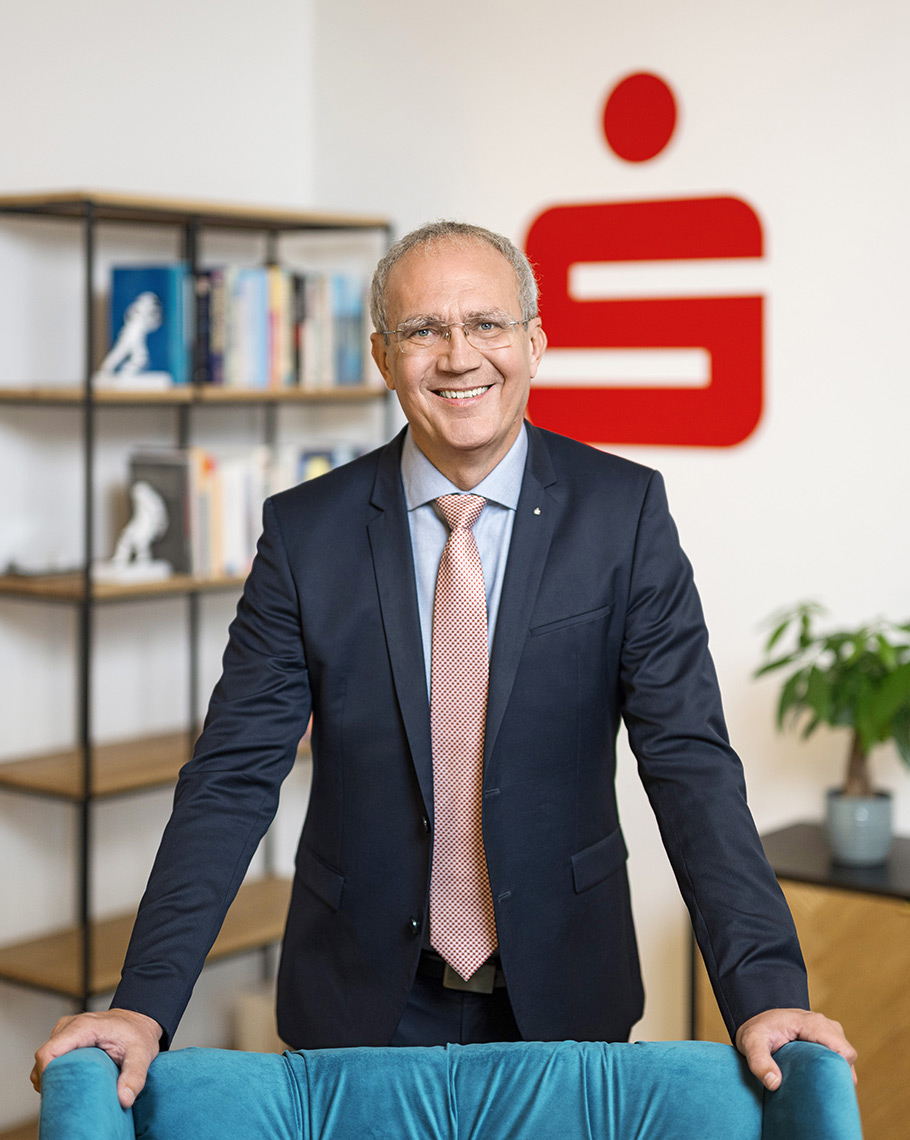
How does this approach affect young people in particular?
Schmalzl: Young people are digitally savvy, but still seek personal guidance when making important financial decisions. The Savings Banks are therefore positioning themselves as relevant partners in their everyday lives. This includes accessible financial education, transparent digital services, flexible communication channels and straightforward transaction processes, as well as personal advice where needed. Young target groups are increasingly being reached via digital platforms, social media, gaming formats such as ‘Schwein gehabt’ on the Fortnite platform, and modern content offerings. At the same time, new formats are emerging, such as Gen Z concept branches, which are designed by young people for young people. Examples include the trainee branch at Sparkasse Leipzig and ‘barer41’ in Munich. In addition, there are digital advisory services via messaging apps and video. S-Neo also specifically targets young audiences, new customers and minors with attractive savings plan solutions. Those who win over young customers early on like this have the chance to build long-term relationships spanning all stages of their financial lives. Young people's need for guidance, stability and a reliable partner by their side becomes even greater in times of economic uncertainty. The Savings Banks fulfil this need: we are both digital and present on the ground.
»Our aim is to achieve excellence and consistent customer experience across all channels.«
Managing Member of the Executive Board of the DSGV
In light of these considerations, what role will the local branch play in the future?
Schmalzl: Branches remain important places for guidance, advice and building trust. Many customers still want a personal point of contact, particularly when it comes to complex financial matters. The strength of the Savings Bank model lies in the interplay between personal and digital proximity. With around 10,500 branches, the Savings Banks continue to have the densest network in Germany. For 90 percent of the population, a Savings Bank is within eight minutes’ reach. Adjustments to the branch network are made where advice and service can be usefully consolidated. At the same time, digital services, self-service locations and mobile solutions such as the Sparkassenbus ensure comprehensive coverage.
We’ve been talking a lot about what’s on offer for young people as customers. How do you attract Gen Z as an employer?
Schmalzl: The Savings Banks combine security, social responsibility and a modern working culture. This generation has high expectations of employers: opportunities for development, modern digital working environments, flexible working models and remote working are taken for granted. The Savings Banks are making targeted investments in these areas. Artificial intelligence is increasingly becoming part of everyday working life and is intended to support staff. At the same time, the Savings Banks continue to invest heavily in training and the development of young talent. The number of apprentices has recently risen significantly: by the end of 2025, around 15,030 apprentices were employed by the Savings Banks, representing an increase of 9.7 percent compared with the previous year. The trend in applicant numbers sends a particularly clear signal: applications for apprenticeship places rose by 33.9 percent, following strong growth recorded as early as 2024. The public mandate and regional commitment create social relevance and a sense of identification, particularly among young people. This is also demonstrated by the programmes offered by the German Sparkassenstiftung for International Cooperation (Savings Banks Foundation - DSIK) abroad, such as the deployment of young employees from the Savings Banks Finance Group in sustainable projects worldwide. The combination of stability, long-term security and innovative capacity remains a key competitive advantage in the labour market.
What does the future hold for the multi-channel approach?
Schmalzl: The multi-channel approach is not a transitional model, but a long-term strategic decision. Banking will remain diverse because people have diverse needs. Personal advice and digital capabilities will converge even more closely in future. Our aim is an integrated customer experience across all contact channels. People expect freedom of choice rather than fixed channel requirements. The combination of digital speed, personalised support, trust and security, as well as transparent self-determination, remains strategically crucial. AI-supported services and digital assistants will play a greater role in future, for example in searching for information, in service processes or in providing tailored offers. At the same time, personal advice remains a central component of the Savings Bank model. It is our aim that Savings Banks will remain robust, relevant and future-proof, particularly for younger generations.